
Laura Walter is Director of Services for Spread a Smile, leading the charity’s family support provision across the country. She has worked as a Senior Radiotherapy Play Specialist at University College London Hospital (UCLH), bringing extensive expertise in paediatric psychosocial care, childhood bereavement and family-centred support. With a Master’s degree in Child Life and Paediatric Psychosocial Care and many years of experience working alongside children undergoing cancer treatment, Laura shares more about the important role Spread a Smile plays within the NHS, bringing opportunities for play, joy and laughter for children with a cancer diagnosis.
 Having worked as an NHS Play Specialist for 14 years and now as Director of Services at Spread a Smile, I have seen first-hand how important opportunities for play, creativity and connection are for children and young people living with cancer. At a time when so much of childhood can be overshadowed by treatment and hospital appointments, these moments become more important than ever.
Life changes overnight after a diagnosis. Everyday things such as going to school, seeing friends, taking part in clubs and activities, or simply enjoying family life can suddenly be replaced by treatment schedules, hospital appointments, difficult conversations, uncertainty and worry.
For a child or young person, it can be a frightening and isolating experience. It changes the shape of their childhood at a time when they should be focused on learning, playing, growing and discovering who they are.
Clinical care will always be the priority. Children and young people need access to the very best treatment and medical expertise available. But they also need support to cope emotionally with everything that comes alongside a cancer diagnosis.
That is why I was pleased to see that both the NHS National Cancer Plan and the wider NHS ambition for more personalised, holistic care recognise that children and young people have needs that extend beyond treatment alone. Emotional wellbeing, positive experiences and support for the whole child (and wider family) are not optional extras.
This is not a new idea for those of us working with children every day. We see first-hand the difference that moments of joy, play, creativity and connection can make.
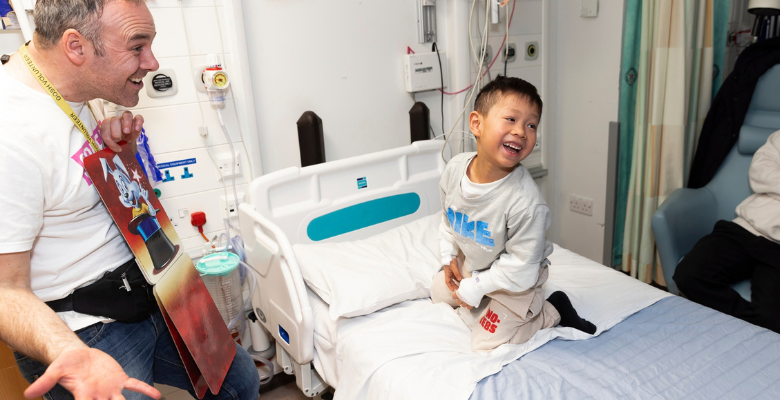
We see children smile for the first time in days when a therapy dog walks into the room. We see young people reconnect with creativity through art, music and poetry. We see families making positive memories together during incredibly difficult circumstances. Most importantly, we see children and young people given opportunities to be themselves again, rather than being defined solely by their diagnosis or treatment.
Those moments do not change a diagnosis. But they can change a child’s experience of treatment. They can provide hope, restore confidence, create positive memories and help children remain connected to who they are beyond illness.
At Spread a Smile, we often talk about helping children to just be children. That might sound simple, but when a child is spending weeks or months in hospital, missing school, missing friends and navigating intensive treatment, opportunities to play, create, laugh and exercise choice become incredibly important.
Child-centred care means seeing the whole child, not just the cancer. It means recognising that alongside treatment, children still need moments of childhood, connection and joy. We believe those moments matter because they help children and families hold onto hope during some of the most challenging periods of their lives.
NHS Play Teams provide an invaluable service for children and young people receiving cancer treatment. Spread a Smile was never created to replace that support. Instead, we work alongside NHS teams to complement the exceptional care already in place.
Today Spread a Smile partners with 39 NHS hospitals and hospices across the country, including many specialist children’s cancer centres. As cancer remains one of the most common serious illnesses affecting the children referred to us, more than half of the children and young people we support are living with cancer.
Through entertainer visits, therapy dogs, art initiatives, virtual sessions and family events, we provide additional opportunities for play, creativity, connection and emotional support. We brighten healthcare environments through murals and artwork, personalise radiotherapy masks to make treatment feel less frightening, and create experiences that help children and families build positive memories.
Truly personalised and holistic care means recognising and responding to the emotional and practical needs of children and families alongside their clinical care. By working in partnership, healthcare services, charities and communities can bring together different expertise and support to help meet those needs. We are proud to work alongside NHS teams and play our part in that wider support.
That’s why I was so delighted to read what The National Cancer Plan for England acknowledges that effective cancer treatment for children includes supporting their emotional wellbeing and access to play, recognising these as important elements of a positive treatment and care experience.
Every child deserves opportunities to play, laugh, create, make choices and simply be themselves, regardless of what they are facing. For us, this is about more than supporting emotional wellbeing. It is about helping children remain connected to childhood, preserving hope and ensuring they are seen as children first and patients second. That is why this work matters, and why we remain committed to reaching more children and families in the years ahead.
To find out more about our work and how you can get involved, please email fundraising@spreadasmile.org