Interview with Play and Youth Team Lead at King’s Hospital
https://spreadasmile.org/wp-content/uploads/2026/10/PIWH2-News-Story-Banners-780x400-1.png 780 400 Susie Susie https://secure.gravatar.com/avatar/df35034d6e0dc0a34b96e2cbd5d9df5b1604bbb302409c0dcb03b9fd2cadd967?s=96&d=mm&r=g“Children in hospital for long periods need a different outlet. Spread a Smile’s visits bring new people and activities each week, giving children something to look forward to. This variety helps them engage, have fun, and break the monotony of their routine while supporting their emotional well-being.
“The benefits to children during these visits include a sense of normality, as well as bringing fun, play, and engagement back into what can be a very difficult experience for both children and their families.
For children spending weeks or even months in hospital, maintaining opportunities to play is incredibly important. Play can help reduce anxiety, encourage self-expression, support emotional wellbeing and create a sense of normality in an unfamiliar environment. Reflecting on the role Spread a Smile plays within the hospital, Áine says:
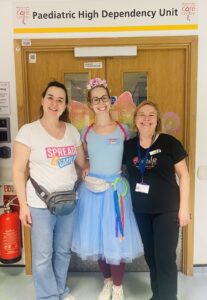 “We receive weekly visits from Spread a Smile charity, including a monthly specialised visit to PICU (the Paediatric Intensive Care Unit). Their artist has created warm and welcoming scenes and pictures across paediatric areas. We utilise the online daily entertainment sessions as well as the Spread a Smile channels for music and songs. In addition, the charity provides gift and toy drops, pamper days, organises larger events that our patients and families can attend, and can tailor individual sessions to meet specific patient needs when required.”
Play is also an important part of holistic care, supporting children emotionally alongside their medical treatment. Áine believes that Spread a Smile’s visits complement the work of hospital play specialists, adding new experiences and opportunities for therapeutic engagement.
“These visits complement and enhance our Play and Youth team’s work rather than replace it. They provide additional therapeutic play opportunities, introduce new stimuli and activities and help support emotional wellbeing in ways that can sometimes be difficult to replicate in day-to-day clinical practice.”
The impact extends far beyond the children themselves. Families, carers and hospital staff often become part of the experience too, creating shared moments of joy across the ward.
“The overall mood lifts when Spread a Smile enter the unit, with staff, families, and patients all engaging. Staff gain real enjoyment from seeing the laughter, smiles, and brightness the visits bring to the children and young people.”
Hospital stays can place huge pressure on families, making opportunities to connect and create positive memories especially valuable.
“Hospital stays can be challenging for families and relationships. Spread a Smile visits support not just patients but also parents, carers, and siblings, creating opportunities for quality time together.”
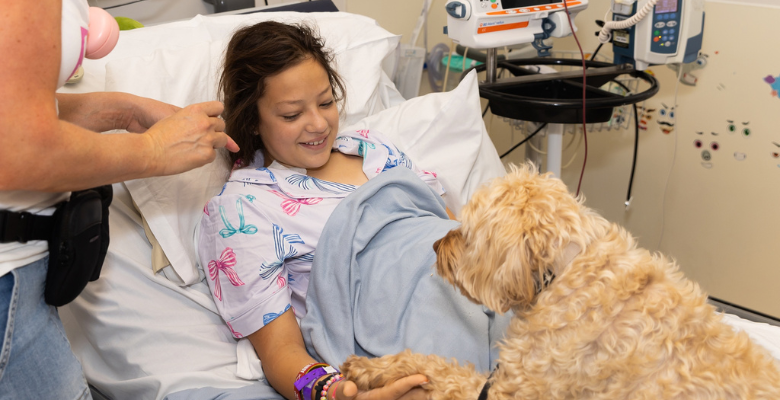
Over the years, Áine has witnessed many remarkable moments demonstrating the power of play and positive distraction in healthcare settings. She recalls a therapy dog helping motivate a child during physiotherapy, a magician calming a child before undergoing a general anaesthetic, and a fairy singing a favourite song to an intubated patient, helping them to open their eyes.
Having worked with Spread a Smile across two hospitals for the past decade, Áine believes the charity’s ability to adapt to individual patients and clinical settings is what makes it so effective.
“What sets Spread a Smile apart is their professionalism, adaptability, and genuinely joyful presence. Their team are warm, engaging, and easily build positive relationships with staff, patients, and families. They tailor their approach to each clinical area, ensuring their visits are always appropriate and impactful.”
During Play in Healthcare Week, we’re celebrating the dedicated play specialists, healthcare teams and charity partners who work together to ensure that play remains at the heart of children’s healthcare.
Because even in the most challenging circumstances, a moment of fun, a favourite song, a visit from a therapy dog or a little bit of magic can make all the difference.
Sign up to our e-newsletter to stay up to date with our work, the difference we make to the families we support and how you can get involved.


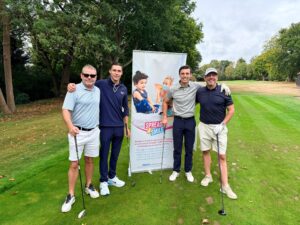 With the sun (mostly) shining on both days, our golfers enjoyed playing the 18-holes – accompanied by entertainment around the course from Spread a Smile musicians, artists and magicians, including our Ambassador, Richard Jones.
 A huge thank you to the team at LMAC Group, who recently hosted their fifth annual Golf Day in support of Spread a Smile. With an impressive 104 golfers taking part in what proved to be their most successful event to date, with over £17,000 raised for Spread a Smile.
 a Smile, the event brought together clients and friends for a day of friendly competition and fundraising, raising an outstanding £25,000.
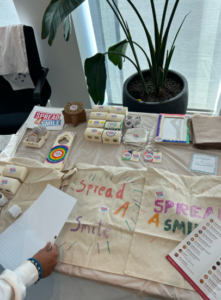
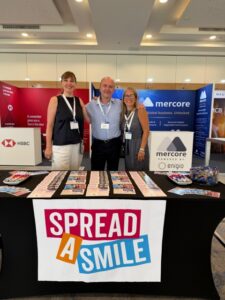 We’re also incredibly grateful to the International Trade and Forfaiting Association (ITFA) for choosing to support Spread a Smile at its annual conference in Split, Croatia.
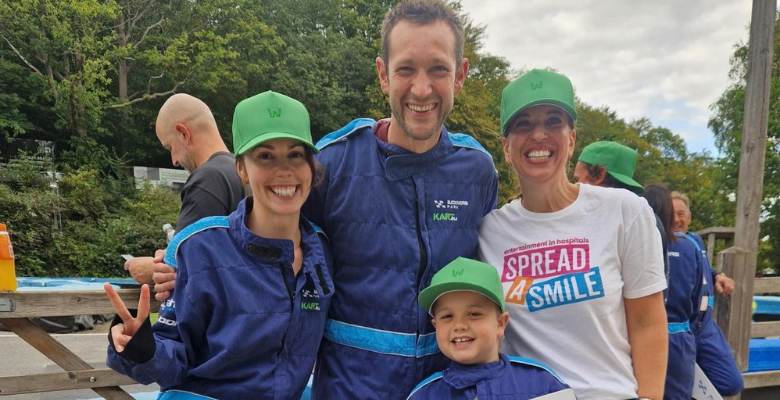
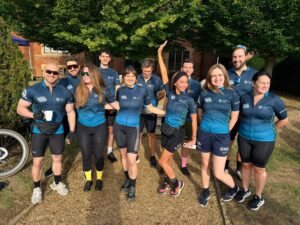
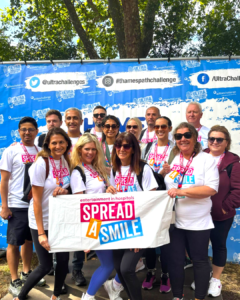 London. Covering 25km and crossing 16 of the capital’s iconic bridges, the challenge brought together colleagues from Westgate Healthcare’s Head Office for a day of teamwork, determination and fundraising. Thanks to the incredible generosity of supporters, the team raised more than £12,600 for Spread a Smile, including an additional contribution from Westgate Healthcare’s Directors.
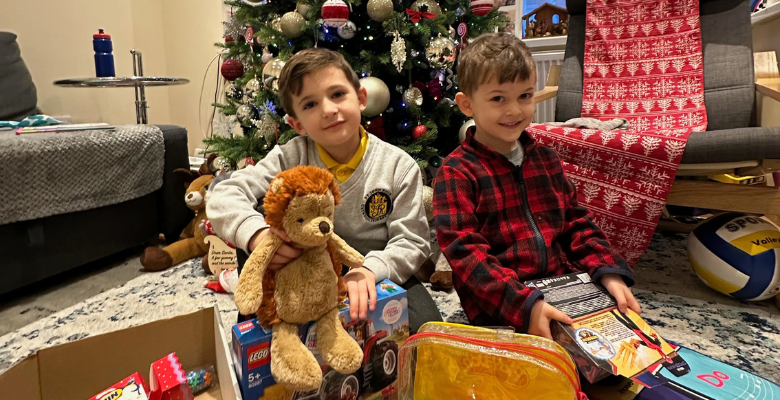

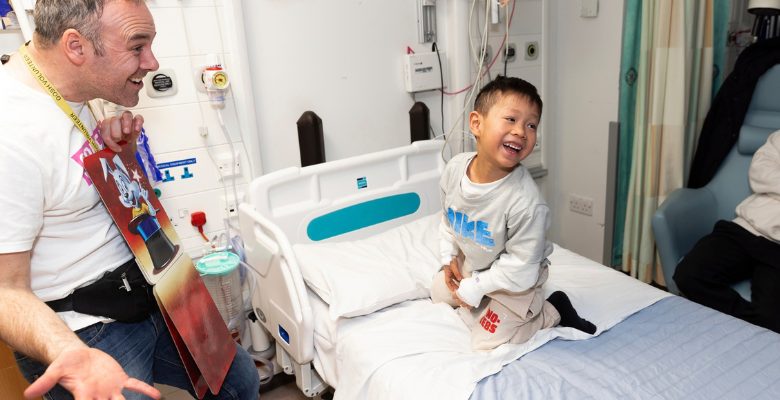
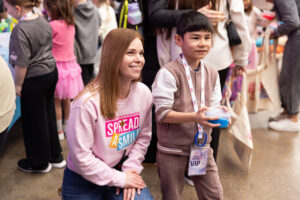 Having worked as an NHS Play Specialist for 14 years and now as Director of Services at Spread a Smile, I have seen first-hand how important opportunities for play, creativity and connection are for children and young people living with cancer. At a time when so much of childhood can be overshadowed by treatment and hospital appointments, these moments become more important than ever.
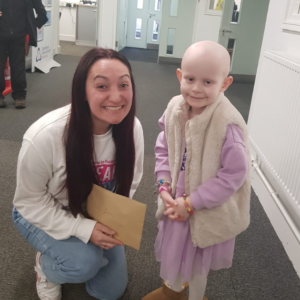 through art, music and poetry. We see families making positive memories together during incredibly difficult circumstances. Most importantly, we see children and young people given opportunities to be themselves again, rather than being defined solely by their diagnosis or treatment.